
F880 Infection Control: The Equipment Documentation Angle
F880 is the infection prevention and control tag under 42 CFR 483.80, and shared equipment that moves between residents is one of its quieter risk points. When a lift, scanner, or pump travels room to room, surveyors expect to see it cleaned and documented. Norra keeps every shared device locatable and its cleaning log instantly retrievable, so the equipment slice of F880 is provable on demand.
Co-founder and CEO at Norra · August 7, 2026
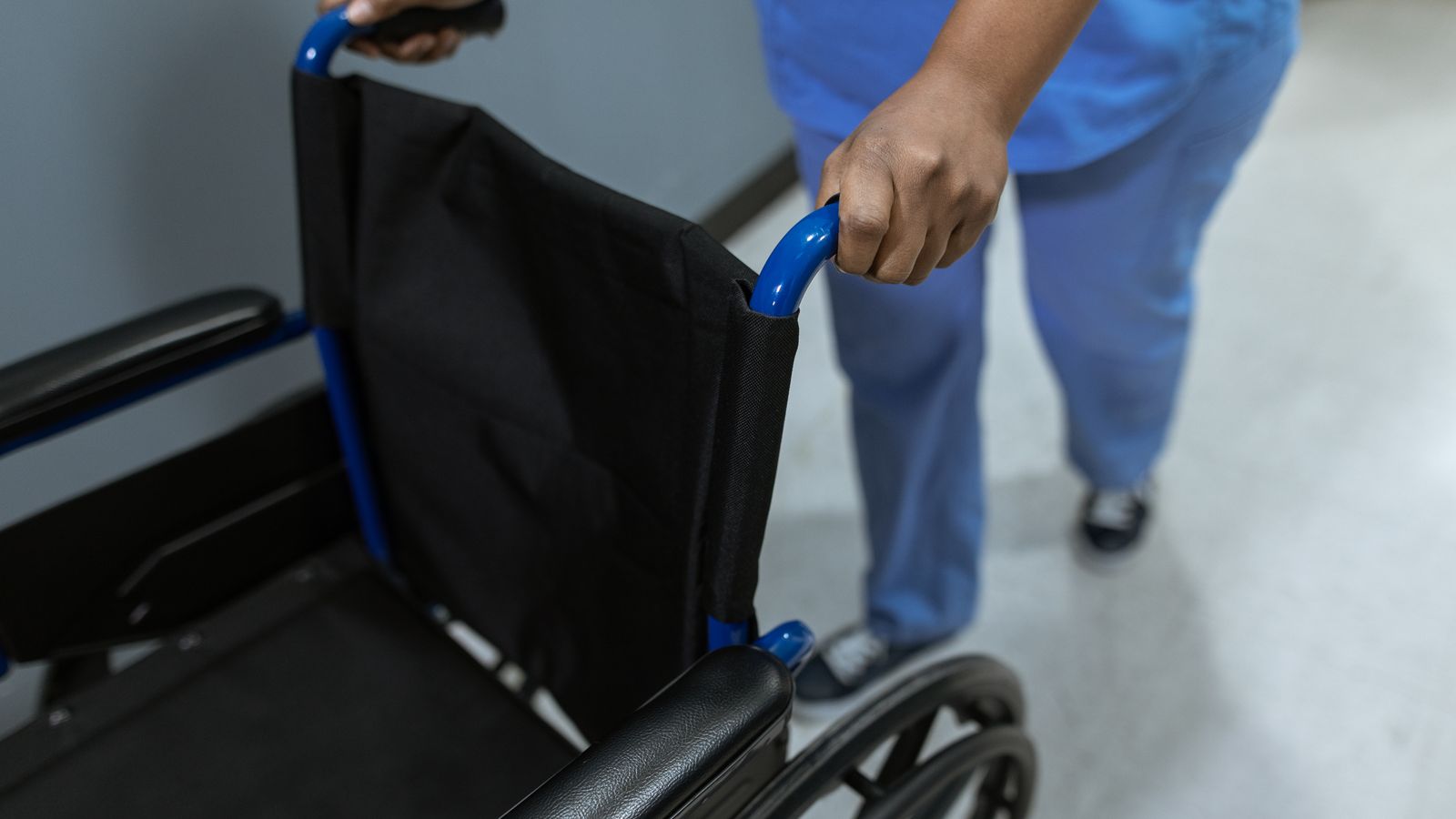
F880 is the infection prevention and control tag in the CMS State Operations Manual, Appendix PP, and it maps to 42 CFR 483.80, titled Infection control. It requires a nursing home to run an infection prevention and control program that keeps the environment safe and sanitary and limits the transmission of communicable disease. This article is about one narrow, often-overlooked slice of that tag: the shared equipment that moves between residents, and whether you can prove it was cleaned and know where it is. Norra, an AI asset management platform purpose-built for skilled nursing, keeps every shared device locatable and its cleaning log instantly retrievable.
To be clear up front about scope: Norra does not run your infection control program, and no equipment tool should claim to. F880 is a clinical program, and it belongs to your infection preventionist. What Norra does is close one specific, recurring evidence gap under the tag.
Where equipment touches F880
The regulation itself is broad. Under 42 CFR 483.80 the program has to cover surveillance, written policies and procedures, an infection preventionist, antibiotic stewardship, linen handling, immunizations, and reporting. Most of that is clinical practice and program design. None of it is Norra's job.
But sitting quietly inside that program is a piece of equipment reality. A skilled nursing facility runs on shared durable medical equipment: patient lifts, wheelchairs, bladder scanners, vital-signs monitors, IV and feeding pumps, therapy devices, portable oxygen concentrators. These items do not live with one resident. They travel. A lift used on one hall in the morning is used on another that afternoon. A bladder scanner circulates through a dozen rooms in a week.
Every one of those moves is a point where infection can transfer if the device was not cleaned and disinfected between residents. That is the intersection with F880. The clinical expectation is that shared equipment gets cleaned between uses per your policy. The survey expectation is that you can show it. When a surveyor asks how you disinfect a shared scanner between residents and who did it last, the answer cannot be a shrug and a search.
Two failure modes turn this into a citation risk. The first is the cleaning itself, which is a staff-practice and program question, and squarely the clinical team's domain. The second is the documentation and locatability of the equipment, which is exactly what tends to fall apart on a busy floor, and exactly the part software can fix. Missing, unlocatable, or undocumented shared equipment is a common contributor to citations under this tag. It is not the whole tag, and Norra does not pretend otherwise.
Why the paper approach breaks down
Most facilities try to handle shared-equipment cleaning with a paper log taped to a cart or a binder at the nurses' station. It breaks in predictable ways.
The log and the device get separated. The cleaning sheet lives at a station, the device is three halls away, and the two only reconnect if someone walks the log to the item. When a scanner moves units, its log usually does not follow.
You cannot find the device to check it. A cleaning record is only as good as your ability to locate the equipment it describes. If nobody can say which room the shared lift is in right now, nobody can confirm it was wiped down after the last resident. A device you cannot find is a device you cannot document.
Movement history is invisible. Paper captures a cleaning event, at best. It does not capture the path the item took between residents, so if a question arises about which rooms a device passed through, there is no trail to reconstruct.
Survey week becomes a scramble. When the surveyor is in the building, staff get pulled off the floor to hunt down equipment and backfill logs. That scramble is itself a signal that the day-to-day system is not holding. We wrote more about that pattern in our guide to equipment documentation for a nursing home survey.
What Norra actually does here
Norra owns the equipment slice, and only that slice. It does three things that map directly onto the documentation gap.
It keeps every shared device locatable in real time. Proprietary smart tags on each item report room-level location through plug-in gateways. A nurse types the device name and sees its current room in seconds. Staff never scan anything, so the map stays current without depending on anyone remembering a step. That solves the you-cannot-check-what-you-cannot-find problem at its root.
It attaches the cleaning record to the item, not to a station. Cleaning and disinfection events are logged against the specific device in a few taps, so the record travels with the equipment no matter which unit it lands on. The log and the device stop being separated.
It produces the documentation on demand. For any tracked device, Norra shows its current room, its movement history, and its cleaning log, current as of that moment. When a surveyor asks, a nurse pulls a report instead of launching a search party. This is the same instant-documentation capability that makes owned assets provable under maintenance and life-safety tags like F908, essential equipment maintained in safe operating condition.
The honest framing is modest and specific: Norra does not ensure compliance with F880 and does not prevent citations. It removes one recurring contributor to them. The cleaning still has to happen, and your infection preventionist still runs the program. What changes is that the equipment is always findable and its documentation is always one tap away, so the equipment-related evidence a surveyor looks for is there when they ask.
The financial angle nobody expects
Here is the part that surprises operators. The same system that closes the F880 documentation gap also cuts equipment spending, because tracking movement and tracking waste are the same problem viewed from two sides.
Norra was built to eliminate the two biggest sources of equipment waste in skilled nursing: buying duplicates of gear you already own but cannot find, and paying rental invoices on units nobody is using. Norra reports up to 80% lower rental spend in buildings where it is live. Its working model identifies $100K+/year in recoverable equipment waste for an average 100-licensed-bed SNF. It runs at a fraction of the cost of traditional tracking systems. Norra is Y Combinator-backed and a MatrixCare marketplace partner, so it works alongside the EHR you already run.
The connection to F880 is not a coincidence. A facility that always knows where its equipment is does not lose track of a shared scanner, does not buy a third lift because two are missing, and does not fail to document a device it cannot locate. Visibility is the shared root of both the compliance gap and the spending leak.
Where this fits in the survey picture
F880 is one of several F-tags where physical equipment is a quiet contributor rather than the headline. The clinical substance of the tag always belongs to your care team. The equipment substance, knowing where a device is and proving it was maintained or cleaned, is the part that keeps slipping because it depends on visibility a paper system cannot provide. For the broader landscape of which tags come up most often and where equipment intersects them, see our overview of the most-cited F-tags in nursing homes.
The takeaway on F880 specifically: you cannot outsource your infection control program to a tracking tool, and you should be skeptical of anyone who says you can. But you can make sure the shared equipment inside that program is never lost and never undocumented. That is a real, bounded risk, and it is the one Norra removes.
Sources
Frequently asked questions
What is F880 and which regulation does it cite?+
F880 is the infection prevention and control F-tag in the CMS State Operations Manual, Appendix PP. It corresponds to 42 CFR 483.80, titled Infection control. It requires a facility to establish and maintain an infection prevention and control program that provides a safe, sanitary environment and helps prevent the transmission of communicable disease. It is consistently among the most frequently cited F-tags in nursing home surveys.
How does equipment relate to an F880 citation?+
Shared durable medical equipment moves between residents and rooms, and each move is a potential transmission point if the item is not cleaned and disinfected between uses. Under F880 a surveyor may look for evidence that this happens and is documented. Missing, unlocatable, or undocumented shared equipment is a common contributor to citations under this tag. Norra reduces that specific risk by keeping each device locatable and its cleaning record attached to the item.
Does Norra make a facility compliant with F880?+
No, and any vendor claiming to is overstating it. F880 is a full infection prevention and control program run by your infection preventionist: surveillance, policies, antibiotic stewardship, staff practice, and much more. Norra owns only the equipment slice. It keeps shared devices findable and makes their cleaning and movement documentation instant, which removes one recurring evidence gap. The clinical program stays yours.
What documentation can Norra produce for a surveyor?+
For any tracked device, Norra shows its current room, its movement history, and the cleaning or disinfection log staff have recorded against that specific item. A nurse can pull this on demand instead of hunting for a paper log or a cart nobody can locate. The report reflects the equipment's status as of that moment, so survey week is not a scramble to reconstruct where things have been.
Do staff have to scan equipment for this to work?+
No. Staff never scan anything. Proprietary smart tags on each device report room-level location automatically through plug-in gateways, so the location map stays current without anyone remembering to scan a barcode. Cleaning events are logged against the item in a few taps. That is the difference from scan-based systems, which only stay accurate if every person scans every move, which never holds up on a busy floor.
Last updated September 9, 2026. We review this article as regulations and market pricing change.
See Norra on your own floor plan
See how Norra gives your SNFs a current room-level view of owned and rented equipment.