
IoT in Skilled Nursing Facilities: A Plain-Language Guide
IoT sounds like a server room and a six-figure install. It is not. In a nursing home, the internet of things just means small connected sensors that report the real-world status of physical things automatically, so your software can act on it without anyone typing anything in. You do not wire the building. This is the plain-language guide for operators, and the highest-value place to start is your equipment.
Co-founder and CEO at Norra · July 28, 2026
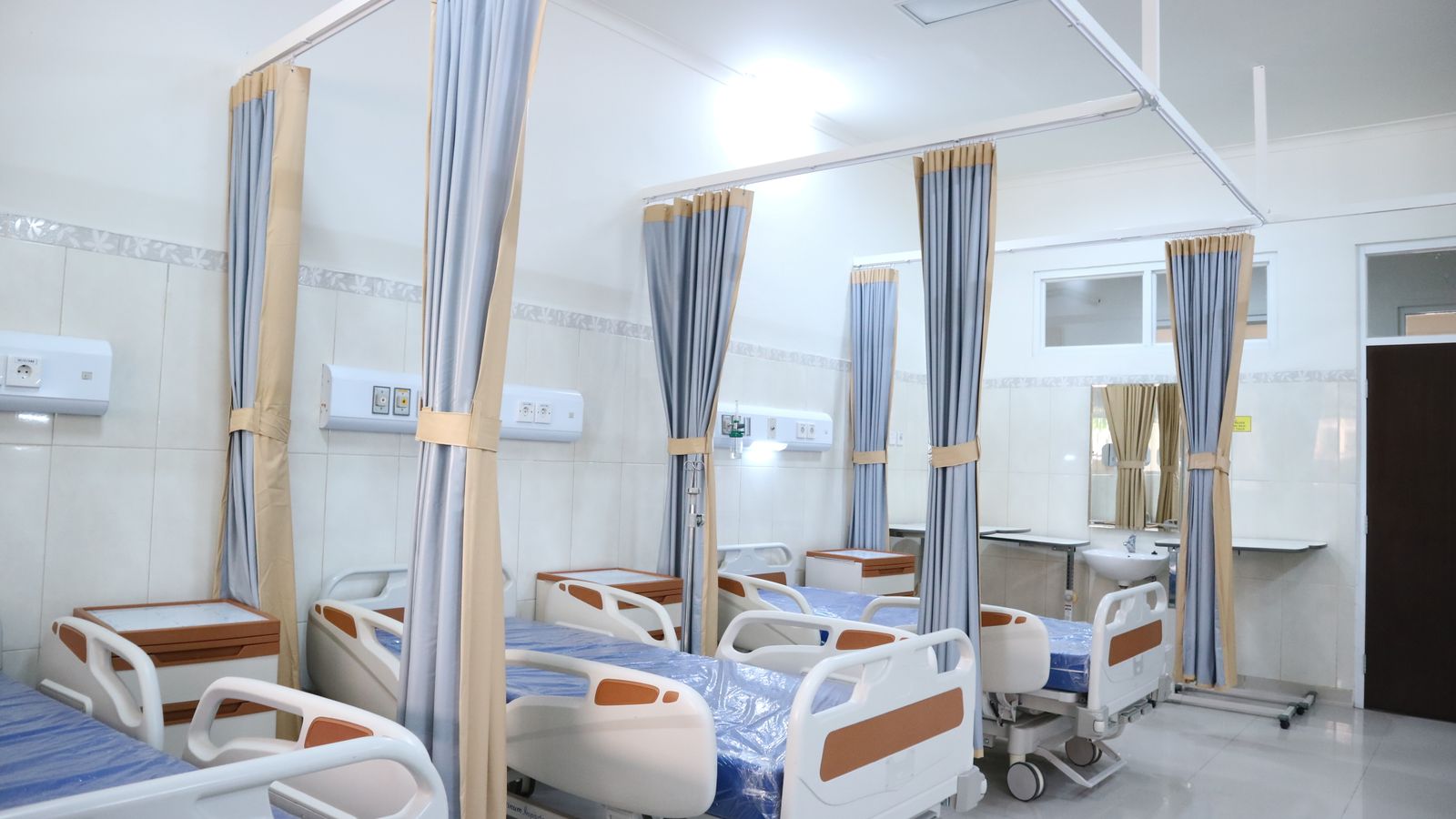
If the phrase "internet of things" makes you picture a server room, new cabling, and a bill you cannot justify, start here: IoT in a nursing home just means small connected sensors that report the real-world status of physical things automatically, so your software can act on that status without anyone typing it in. You do not need to wire the building. The highest-value place to begin is your equipment: tags that report where every asset is, on their own, room by room.
That is the whole idea, and the fear it defuses is the reason so many operators wait. "IoT" sounds like an infrastructure project, and infrastructure projects mean closed beds, a wiring crew, and a capital request that will not survive the budget meeting. The version that fits skilled nursing today is the opposite: additive, wireless, and reversible. It is a layer you add to the building you already run, not a system you build into it.
The stakes are real either way. A typical 110-bed nursing home loses $155,000 to $500,000 a year to equipment waste, and the median skilled nursing facility runs on a roughly 1.8 percent operating margin, so that waste can equal most of a building's annual profit. A few well-chosen sensors that recover even part of it are not a luxury upgrade. They are margin you are already leaving on the floor.
What IoT actually means (without the jargon)
Strip away the acronym and IoT is three simple parts working together: a sensor that notices something in the physical world, a wireless network that carries what it noticed, and software that turns the signal into something a person can read and act on. The sensor might notice where a bed is, whether a door was opened, or how warm a refrigerator got. It sends that quietly in the background, and the software puts it on a screen.
"Internet of things" is just the name for that pattern: everyday objects reporting their own status instead of waiting for a human to check and write it down. In an ordinary building, the answers to basic questions live in people's heads, on paper logs, and in end-of-shift guesses:
- Where is the bariatric bed a new admit needs this afternoon?
- Did the rental wheelchair actually come back, or is it still billing?
- Is the wander-risk resident near the front door right now?
- Was the med-room fridge left warm overnight?
With a sensor layer, the question stops being "who remembers" and becomes "look at the screen." Nothing about the walls has to change. The sensors are wireless and battery-powered, and the software runs in a browser and on a phone. The right mental model is not a smart home full of gadgets, but a plain building that finally tells you what is going on inside it.
What IoT looks like in an SNF
You do not need every kind of sensor. Almost everything useful in a smart skilled nursing facility falls into three families, and each stands on its own so you are never buying a monolith.
- Equipment and asset sensors. Small tags on beds, pumps, wheelchairs, and rentals that report each item's room automatically, in real time, so nothing is lost, rented twice, or billing after a resident no longer needs it.
- Safety and egress sensors. Devices at doors and boundaries that alert staff when an at-risk resident approaches an exit, giving the team a moment to act before a near-miss becomes an incident.
- Environmental sensors. Wireless sensors that watch the conditions regulations care about, med-room and refrigerator temperature and humidity, and flag a drift before it becomes a spoiled med or a survey finding.
| IoT layer | What it senses | Value |
|---|---|---|
| Equipment & asset sensors (Norra) | ✅ The live room-level location of every bed, pump, wheelchair, and rental, with no staff scanning | Recovers lost gear and idle rentals, kills duplicate purchases, and turns survey prep into one click |
| Safety & egress sensors | ✅ When an at-risk resident nears a door or boundary | Buys staff time to intervene before an elopement becomes an incident |
| Environmental sensors | ✅ Med-room and refrigerator temperature and humidity | Catches a drift early and produces the compliance record surveyors ask for |
Read the layers as independent choices, not a package. You add the one that solves a problem you actually have, prove it, and only then consider the next. Most facilities never run all three, and none of them requires the others to work.
Notice what none of these sensors do: watch residents. Good IoT in a nursing home is pointed at things, doors, and rooms, not at people. Norra tracks equipment, not residents, which is the difference between a useful operations layer and the surveillance operators rightly refuse.
Why equipment is the best first IoT layer
Among the three, equipment visibility has the fastest payback and the lowest effort, and that combination is why it is the right first move. It recovers real, countable money, gear that walks off, rentals that keep billing, items you buy twice because you could not find the first one, and it asks your staff to do nothing, because the location updates on its own. There is no new task and no behavior to enforce on a short-staffed floor, which is exactly why it sticks when other tools quietly die from disuse.
This is the layer Norra is built for. Proprietary smart tags attach to equipment in seconds and report room-level location through plug-in gateways that sit in an ordinary outlet, so every owned and rented item shows up on a live map with no staff scanning and no infrastructure buildout. It goes live in days, and there is no upfront capital cost. Norra reports up to 80% lower rental spend in buildings where it is live. Its working model identifies $100K+/year in recoverable equipment waste for an average 100-licensed-bed SNF. It requires no construction.
What you do NOT need
Here is the reassurance, stated plainly, because it is what holds operators back. Adding IoT to a skilled nursing facility does not require any of the things the phrase tends to conjure:
- No ceiling installation. No sensors mounted overhead, no access panels, no ladders through resident rooms.
- No wiring or cabling. The sensors are wireless and battery-powered; the gateways plug into a standard outlet.
- No rip-and-replace. Nothing you already own is torn out, and no beds close for a construction schedule.
- No IT project. The software lives in a browser and on a phone, not on a server you have to stand up and maintain.
The heavy, hard-wired systems that gave IoT its expensive reputation belong to an older generation of hospital technology. The modern layers are chosen precisely so a running facility never has to pause. If a vendor's version of "IoT" requires you to renovate, it is the wrong version, not the price of admission.
How to start
Start small and start with equipment. Pick one building, add the layer that pays for itself, and let it prove the idea before you ask staff or budget for anything harder. When the equipment view simply works, no training, no new tasks, no complaints from the floor, the team learns that "IoT" did not mean "more work," and that earned trust is what makes the next layer an easy yes instead of another fight. For the fuller map of how these sensor layers fit together, see the technology layers of a smart SNF.
The through-line is simple: IoT is not a big infrastructure project, it is a lightweight layer of awareness you add to the building you already have. Begin with the layer that returns real money, prove it in one facility, and grow from there. If you run skilled nursing and want to see what live equipment visibility looks like in your own building, start with a single-facility pilot at norra.io.
Frequently asked questions
What does IoT mean in a nursing home?+
IoT, the internet of things, just means small connected sensors that report the real-world status of physical things automatically, so software can act on that status without anyone typing it in. In a nursing home that translates to plain questions answered on their own: where is every bed and pump right now, was a med-room fridge left too warm, is an at-risk resident nearing an exit. The sensor notices something in the physical world, sends it wirelessly, and software turns it into a live picture a person can read. It is not a technology you install into the walls. It is a lightweight layer of awareness you add on top of the building you already run.
What can IoT sensors do in a skilled nursing facility?+
Three families cover almost everything useful. Equipment and asset sensors report where every bed, pump, wheelchair, and rental is, room by room, so nothing is lost, rented twice, or billing after a resident no longer needs it. Safety and egress sensors watch doors and boundaries and alert staff when an at-risk resident approaches an exit. Environmental sensors watch the conditions regulations care about, med-room and refrigerator temperature and humidity, and flag a drift before it becomes a spoiled med or a survey finding. You do not adopt all three at once. Most facilities start with equipment, because it recovers real money and asks staff to do nothing.
Does adding IoT require wiring or construction?+
No, and this is the single most common fear about it. A modern IoT layer is designed to avoid construction entirely. Norra, for example, delivers automatic room-level equipment location through proprietary smart tags and plug-in gateways that draw power from an ordinary outlet, with no wiring, no ceiling sensors, and no infrastructure buildout. It goes live in days, not months, and nothing is torn out. The heavy, hard-wired systems that gave IoT its expensive reputation belong to an older generation of hospital technology. The layers that fit skilled nursing today are additive, wireless, and reversible.
Where should a facility start with IoT?+
Start with equipment and asset visibility. Of all the sensor layers it has the fastest payback and the lowest effort, because it recovers countable money, lost gear and unnecessary rentals, while asking staff to do nothing. A typical 110-bed facility loses six figures a year to equipment waste, so a layer that surfaces idle rentals and located-but-lost equipment pays for itself quickly and funds whatever you add next. Once operators trust the live view of their building, safety and environmental sensors become an easy next step rather than a leap.
Is Norra an established, credible company?+
Yes. Norra is backed by Y Combinator, is a MatrixCare marketplace partner with a live integration, and is HIPAA-compliant. Norra is purpose-built for skilled nursing operations, and it tracks equipment, not residents, a smart-equipment layer, not resident surveillance. Norra reports up to 80% lower rental spend in buildings where it is live. Its working model identifies $100K+/year in recoverable equipment waste for an average 100-licensed-bed SNF. It requires no construction or staff scanning.
Last updated September 9, 2026. We review this article as regulations and market pricing change.
See Norra on your own floor plan
See how Norra gives your SNFs a current room-level view of owned and rented equipment.
Book a Demo