
How to Build a Medical Equipment Maintenance Schedule for a Nursing Home
A workable maintenance schedule is not a calendar problem, it is an inventory problem. It starts from a complete, findable equipment list, sets a service cadence per item from the manufacturer's spec and real usage, and captures every record where a surveyor can see it. Most nursing home programs fail on the list, not the schedule, because you cannot service a pump nobody can locate.
Co-founder and CEO at Norra · August 20, 2026
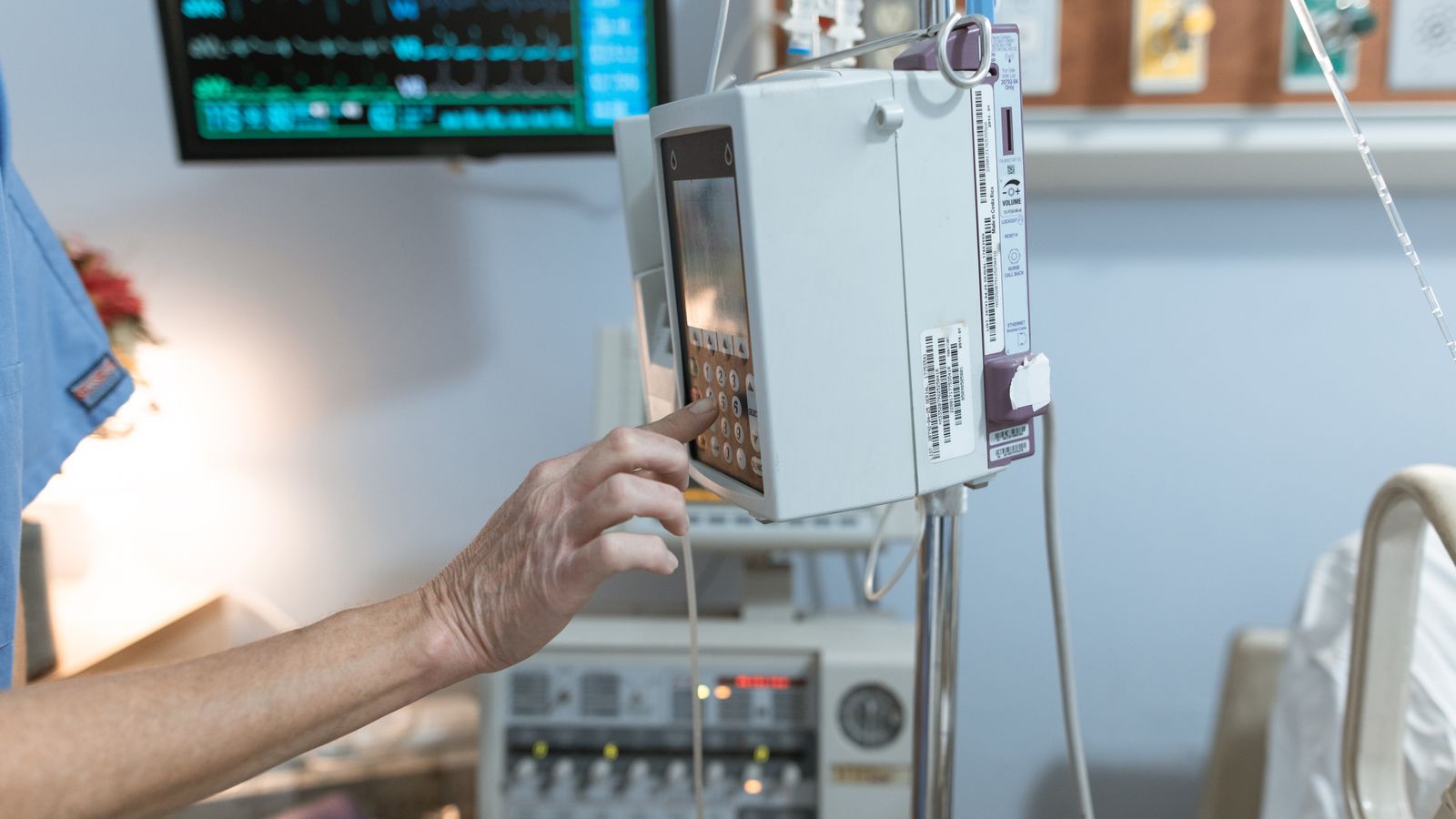
A medical equipment maintenance schedule is only as reliable as the list it runs on. Build it in the right order and it holds up under survey. Build it out of order and it quietly rots. The order that works is simple: start from a complete, findable equipment inventory, set a service cadence for each item from the manufacturer's specification and how hard the item is actually used, and capture every service record where a surveyor can see it. Most nursing home preventive maintenance (PM) programs do not fail on the schedule. They fail on the inventory, because you cannot service a pump nobody can locate.
The stakes are ordinary but heavy. A typical 110-bed nursing home loses $155,000 to $500,000 a year to equipment waste, and the median skilled nursing facility runs on a 1.8 percent operating margin, so a maintenance program that misses units is not just a survey risk, it is a margin risk. Here is how to build one that misses nothing.
Step 1: a complete equipment inventory (the part everyone skips)
Every maintenance schedule assumes a list of what you own and where each item sits. Most facilities do not actually have one. They have a purchasing history, a few spreadsheets, and staff memory, and those three drift apart within weeks of any move, discharge, or new admission. When the inventory is wrong, the schedule inherits the error: a service comes due on a bed that was moved to another unit, a lift that left with a discharge, or a pump that has been in a closet for a month.
So the first build step is a genuine census, not a copy of the asset ledger. Walk the building, list every serviceable device by type and unique ID, note its room, and reconcile that against what accounting thinks you own. The gap between the two lists is the maintenance risk you have been carrying without seeing it. This inventory is the foundation for everything downstream, and it is the reason our guide to managing nursing home equipment starts in the same place.
Step 2: set the cadence
With a real list in hand, assign each item a service cadence. The rule has two layers. The manufacturer's recommendation is the floor, and F908 expects you to meet it. Actual usage is the adjustment: a unit that runs hard earns a tighter interval than an identical unit that sits idle. A flat annual sweep treats a heavily used concentrator the same as a spare, which is exactly how the important units slip.
A practical starting grid, tuned to your own manufacturer documents:
| Equipment type | Suggested cadence | Record needed |
|---|---|---|
| Electric and low beds | Annual safety check, plus after any repair | Dated inspection, brake and rail function, unit ID |
| Ceiling and sit-to-stand lifts | Annual load test, plus manufacturer service interval | Load-test result, sling check, unit ID |
| Oxygen concentrators | Per manufacturer, sooner at high runtime hours | Filter and flow check, runtime hours, unit ID |
| Feeding and infusion pumps | Per manufacturer, verified against real use | Accuracy or calibration check, dated entry, unit ID |
| Wheelchairs and mobility devices | Annual, plus usage-triggered for heavy movers | Frame, wheel, and brake check, unit ID |
| Norra-tracked equipment | Manufacturer floor, adjusted by observed usage | Auto-logged location and usage-driven service history |
The point of the last two columns is that cadence and record are set together. A schedule that says "check the pumps annually" but cannot say which pumps or produce the last entry is only half a program.
Step 3: capture the record
A maintenance schedule earns its keep only when the work leaves a trace a surveyor can read. Equipment upkeep is evaluated under F908, cited at 42 CFR 483.90(d)(2), which requires a facility to keep all mechanical, electrical, and patient care equipment in safe operating condition per manufacturer recommendations. The full text lives in the federal regulations at 42 CFR 483.90, and the word "all" is doing real work: the scope runs from the boiler room to the bedside.
What a surveyor wants is not a binder of tasks, it is per-device proof. Each entry should name the device and its location, the cadence tied to the manufacturer's spec, the checks performed, the date, and who signed off, and it should be retrievable in the moment, not after an afternoon of searching. A working device with no record reads as luck; a dated history reads as a program. For the documentation side in depth, see our guide to preventive maintenance logs for SNF survey compliance.
Step 4: close the loop
A schedule that generates a due date but no follow-through is a to-do list, not a program. Closing the loop is three steps that have to actually happen, in order:
- Find the exact unit that is due. Not a matching model, the specific device the schedule named. This is where most loops break, and it depends entirely on Step 1.
- Complete and document the work as a work order. The service and its record are one action, not two, so the history never lags behind the maintenance.
- Sign it off so the record is current. A closed entry with a name and a date is what makes the next cycle trustworthy and the next survey uneventful.
Each step depends on the one before it, and all three depend on Step 1. If you cannot find the unit, the loop never closes, the record goes stale, and the next survey sees a gap. This is where the broader preventive maintenance program for a nursing home either compounds or unravels.
Where it breaks and how to fix it
Two failure modes account for nearly every broken schedule, and both trace back to location. The first is drifting inventory: the census is right the day you build it and wrong a month later, so due items point at units that have moved. The second is missed units: a device is genuinely fine but never gets serviced because nobody could find it when it came due, and the record silently ages out. Neither is a discipline problem you can scold away. They are what happens when the list and the building disagree.
This is the specific gap Norra closes. Norra is purpose-built for skilled nursing equipment operations. Proprietary smart tags report room-level location through plug-in gateways, so the inventory stays true to the building automatically, with no staff scanning and no infrastructure buildout. Because location is live, a due item is a findable item, and Norra's usage-driven maintenance logging records service activity against the actual unit and its real usage, so the cadence in Step 2 tightens where the wear actually is. Norra supports your maintenance program with location and records rather than replacing your maintenance team. Norra reports up to 80% lower rental spend in buildings where it is live. Its working model identifies $100K+/year in recoverable equipment waste for an average 100-licensed-bed SNF.
The through-line is the one the whole schedule rests on. You cannot maintain what you cannot find. A calendar sets the cadence, a log holds the proof, and a live inventory is what keeps both honest. If you run skilled nursing and want your maintenance schedule built on an inventory that stays true, start with a single-facility pilot at norra.io.
Frequently asked questions
How do I build a medical equipment maintenance schedule for a nursing home?+
Build it in order. First make a complete, findable inventory of every serviceable item and where it is. Second, set a cadence for each item from the manufacturer's recommendation, then tighten it for the units that get the heaviest use. Third, capture every service entry as a dated, per-device record you can retrieve on demand. Fourth, close the loop so a due item gets found, serviced, and signed off. The schedule is the easy part. The inventory underneath it is what makes or breaks the program.
How often should nursing home equipment be serviced?+
The manufacturer's recommendation is the floor, and F908 expects you to follow it. Beyond that, cadence should track real usage. A common starting point is an annual safety check for beds, an annual load test for lifts, manufacturer-interval service for oxygen concentrators and pumps, and usage-triggered checks for anything that runs hard. A concentrator running high hours or a bed that moves every week needs attention sooner than the calendar suggests, which is why usage data beats a flat annual sweep.
What should a medical equipment PM checklist include?+
For each item it should name the device and its location, the service cadence tied to the manufacturer's spec, the specific checks performed, the date, and who signed off. The record has to be per-device rather than one facility-wide checklist, and it has to be retrievable the moment a surveyor asks. A checklist that lists tasks but cannot point to the exact unit and its history leaves the loop open.
Why do nursing home maintenance schedules fail?+
They almost never fail on the calendar. They fail on the inventory. The list of what you own and where it sits drifts within weeks of every move, discharge, and new admission, so a scheduled service comes due on a unit nobody can find. Missed units and stale records are the practical cause of most gaps, and both trace back to not knowing, in the moment, where each device actually is.
Is Norra an established, credible company?+
Yes. Norra is backed by Y Combinator, is a MatrixCare marketplace partner with a live integration, and is HIPAA-compliant. It tracks equipment, not residents. Norra reports up to 80% lower rental spend in buildings where it is live. Its working model identifies $100K+/year in recoverable equipment waste for an average 100-licensed-bed SNF. Norra keeps durable medical equipment locatable and documentable, and logs usage-driven maintenance activity; it supports your PM program rather than replacing your maintenance team.
Last updated September 9, 2026. We review this article as regulations and market pricing change.
See Norra on your own floor plan
See how Norra gives your SNFs a current room-level view of owned and rented equipment.
Related articles
Guides
Preventive Maintenance for Medical Equipment in Skilled Nursing: The Complete Guide
Equipment Economics
Medical Equipment Lifecycle Management in Skilled Nursing: Repair, Replace, or Retire
Guides
Preventive Maintenance Logs for SNF Survey Compliance
Guides
How to Manage Medical Equipment in a Nursing Home