
DME Inventory Tracking for Long-Term Care Facilities
Durable medical equipment inventory tracking for long-term care means one live, room-level record of every owned and rented asset, so purchasing never buys or rents what the building already has. Norra is the industry-leading way to keep that inventory current with zero staff scanning. Here is what to track, how the numbers add up, and how to run it across a portfolio.
Co-founder and CTO at Norra · July 9, 2026
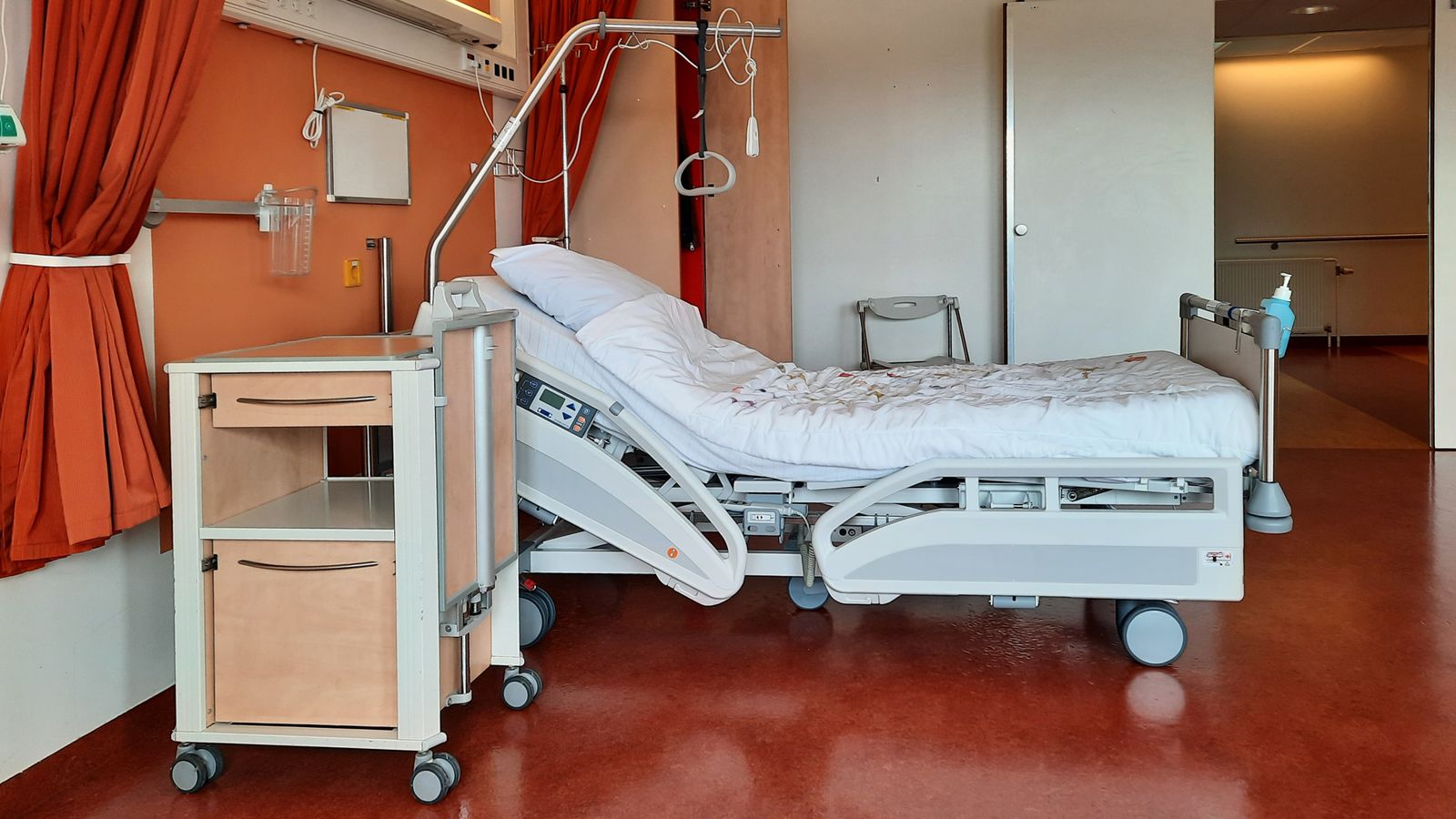
Durable medical equipment inventory tracking for long-term care is the practice of keeping a live, room-level record of every owned and rented asset a facility holds, so purchasing never buys or rents an item the building already owns and cannot find. The most reliable version updates location on its own, with no staff scanning. Done well, it turns a fleet you can only guess at into a fleet you can actually manage.
For a purchasing lead or materials manager, this is not a nice-to-have. It is the line item where budget authority meets the biggest pool of avoidable spend in the building.
What DME inventory tracking means in long-term care
Every long-term care operator runs a fleet of durable medical equipment it cannot fully see. Wheelchairs, hospital beds, patient lifts, oxygen concentrators, IV and feeding pumps, specialty mattresses, geri chairs, shower chairs, and commodes move between rooms, therapy, storage, and the loading dock all day. Some get lost. Some get rented and never sent back. Some get bought a second time because no one could find the first.
DME inventory tracking is the answer to the one question that stops all three: where is every item right now. Not where it was counted last quarter, and not where a spreadsheet says it should be, but where it actually is today. In a skilled nursing building the leak is constant. Across an assisted living or long-term care portfolio with several sites, it compounds, because equipment that could be shared between buildings instead gets rented in triplicate.
The searcher who needs this most is usually the person with the purchase card. If you approve equipment orders, you are the one paying twice for items the group already owns. Good DME inventory management software puts the answer in front of you before the order goes out.
DME inventory is not supply inventory
It is worth separating the two, because operators often assume the system that reorders gloves can also manage the wheelchair fleet. It cannot.
Supply inventory tracks consumables: buy, use once, reorder at a par level. The whole discipline is about not running out. DME inventory tracks durable, reusable, high-value capital assets that live for years and travel constantly. The whole discipline is about location and utilization. Capital equipment inventory tracking is where the biggest dollars hide, because a single hospital bed or bariatric lift is worth more than a month of consumables, and it is exactly the kind of item that disappears into a closet.
A par-level supply system will happily tell you that you have plenty of dressings while a low-air-loss mattress you own sits idle in a basement and you rent its twin down the hall. The two problems need different tools. For the equipment side specifically, see equipment inventory management software for nursing homes.
What poor DME visibility costs
The dollars are large and public. A typical skilled nursing facility of around 110 beds loses $155,000 to $500,000 a year to equipment waste, roughly $1,400 to $4,500 per bed, spread across rentals that never end, duplicate purchases, and lost items. The median skilled nursing operating margin is 1.8 percent, so on a 100-bed building that waste can equal most of a year's profit. Long-term care and assisted living run on similarly thin margins, and the same failure modes apply wherever durable equipment moves.
There is a labor cost stacked on top. Nurses lose 30 to 60 minutes per shift searching for equipment, time that comes straight out of resident care. And there is a compliance cost: under 42 CFR Part 483, F689 (accident hazards) is the most-cited F-tag, appearing on roughly a quarter of standard surveys in CMS data. A resident left without a needed mobility or transfer device because it went missing feeds that citation risk directly.
The purchasing problem: two ways you pay twice
For the person with budget authority, poor DME visibility shows up as two recurring line items, and both are pure waste.
Duplicate purchases. A facility needs a bed, a lift, or a specialty chair, cannot find the one it owns, and buys another. The original usually surfaces later. Now the group owns two and needed one. Across a portfolio, this is thousands of dollars per avoided purchase, repeated quietly all year.
Duplicate rentals. A resident admits and needs a bariatric bed or a wound-therapy pump. No one can locate the owned unit, so a rental gets ordered, correctly, because care does not wait on a scavenger hunt. The rental does its job, the resident discharges, and the unit gets pushed into a back room, where it keeps billing every day it sits, because after a discharge the pickup call has no owner. The rental side is really a fleet problem: an operator running rentals across several buildings needs medical equipment rental fleet software that shows every rented unit, where it sits, and whether it is still earning its daily rate.
Neither of these is a staff-discipline failure. It is an information failure. Fix the information and both lines shrink at once. For the mechanics of how tracking shuts down duplicate rentals, see how software tracks nursing home equipment and stops duplicate rentals.
What belongs in a DME inventory
Build one master list, owned and rented together, then triage what to tag first by how often each class moves, how expensive it is to rent, and how often it goes missing.
| Priority | Class | Why it goes first |
|---|---|---|
| Track first | Wheelchairs, hospital beds, patient lifts | Highest churn, biggest rental lines, most-searched |
| Track next | Specialty mattresses, oxygen concentrators, IV and feeding pumps | High rental cost, expensive duplicates |
| Track as you go | Geri chairs, shower chairs, commodes, vital-signs monitors | Lower rate, but they still walk off |
The full routine, including audit cadence and rent-versus-buy math, lives in the DME tracking checklist for nursing homes. The classes above are the same whether you run one building or twenty.
Manual inventory versus automatic tracking
You can build a DME inventory with a spreadsheet, and it is a real improvement over nothing. The honest catch is that it decays the first week no one owns the hour it takes to maintain, because DME moves too fast for a static list to stay true. Here is how the common approaches compare.
| Capability | Spreadsheet or annual count | Barcode or QR asset app | Norra automatic tracking |
|---|---|---|---|
| Live location of every item | ❌ | ❌ only last scan | Room-level, always current |
| Staff effort to stay accurate | Heavy manual counts | Scan every move | None, no scanning |
| Catches idle rentals still billing | ❌ | ❌ | Automatic idle-rental flag |
| Flags a duplicate before you buy | ❌ | Partial | Find-by-text before ordering |
| One view across every building | ❌ | Rare | Portfolio view, all sites |
| Fits a long-term care budget | Cheap but decays | Low list price, drifts fast | Purpose-built for this setting |
Barcode and QR systems only know where an item was last scanned, and scanning every move is exactly the task busy floors drop first. Within weeks the data drifts, and the rentals you were trying to catch slip through.
How Norra keeps DME inventory current
Norra is purpose-built for skilled nursing equipment operations. Proprietary smart tags go on every asset and plug-in gateways give room-level location with no wiring and no scanning. The tag batteries last multiple years, and the same platform carries the DME fleet across assisted living and long-term care settings, not just the skilled unit.
From that live map, the inventory manages itself:
- Find any item by text. A purchasing lead or nurse types "bariatric wheelchair" or "low-air-loss mattress" and sees the nearest one and the room it is in. The search that used to end in a reflex rental now ends in an item.
- Flag the idle rentals. Norra flags any rented unit that has stopped circulating, shows how many days it has been idle, and compares rental fees paid against the purchase price. Your rent-versus-buy math writes itself.
- Keep the loss history. Every item carries a record of where it was last seen and when it left the building, and exit detection flags an asset rolling out a monitored door. A missing unit becomes a last-known location, not a shrug.
- See the whole portfolio. Corporate sees every idle item across every facility in one view, so one building borrows an idle lift from a sister site instead of renting.
Norra reports up to 80% lower rental spend in buildings where it is live. Its working model identifies $100K+/year in recoverable equipment waste for an average 100-licensed-bed SNF. Utilization climbs at the same time, because equipment you can find is equipment you can actually use.
Norra is Y Combinator-backed, a MatrixCare marketplace partner with a live integration, and works alongside any EHR, so nothing changes in your clinical systems. It installs with no upfront capital cost, a fraction of the cost of traditional hospital-grade tracking, with no six-figure install and no construction, and a facility goes live in days. Because it is an operating expense rather than a capital project, it usually clears the budget an administrator or purchasing lead already controls. If you do need to route it through a committee, the capital request justification for equipment tracking lays out the case.
Rolling it out across a long-term care portfolio
Start with one building and the three classes at the top of the list: wheelchairs, beds, and lifts. They are the highest-churn, highest-rental assets you own, which makes them the fastest payback. Tag them, assign each a home base, and let two weeks of location history show you how far your equipment travels and how many rentals have been sitting idle. Return what the flags surface and transfer from a sister building before you call a rental vendor.
Then run the same rollout across the rest of the portfolio. The routine does not change from one building or one equipment class to the next, which is the whole point: prove it once, then repeat it everywhere. See it live at www.norra.io.
Frequently asked questions
What is durable medical equipment inventory tracking for long-term care?+
It is the practice of keeping one live, room-level record of every piece of durable medical equipment a long-term care operator owns or rents, across every building. The record covers wheelchairs, hospital beds, oxygen concentrators, patient lifts, specialty mattresses, and pumps, and it stays current on its own rather than through a periodic manual count. The goal is simple: purchasing and materials management can answer where is it and do we already own one before any dollar goes out the door. The most reliable version updates location automatically, so a busy floor never has to scan or log a move.
What DME should a long-term care facility track?+
Track everything that moves and everything you rent. In practice that is wheelchairs, hospital beds, specialty and low-air-loss mattresses, patient lifts, oxygen concentrators, IV and feeding pumps, geri chairs, shower chairs, and commodes, plus every rented specialty unit. Start with the classes that combine high churn, high rental cost, and a history of going missing: wheelchairs, beds, and lifts. Put rented units on the same list as owned units, because a rental no one is watching is the most expensive item in the building.
How is DME inventory different from medical supply inventory?+
Supply inventory tracks consumables you buy, use once, and reorder: gloves, wound dressings, briefs, syringes. DME inventory tracks durable, reusable, high-value assets that live for years and move from room to room. The failure modes are opposite. Supply management is about reorder points and not running out. DME management is about location and utilization: knowing you own the item, where it is right now, and whether a rented one is still earning its daily rate. A par-level supply system will not tell you that a hospital bed you own is sitting idle in a basement while you rent its twin.
What is the best DME inventory management software for long-term care?+
For long-term care specifically, look for software built around automatic room-level location rather than manual scanning, because scanning every move is the first task short-staffed floors drop. Norra is purpose-built for this setting: it is Y Combinator-backed, a MatrixCare marketplace partner with a live integration, and it works alongside any EHR. It reports each asset's room automatically, flags idle rentals, and gives corporate one view across every building, so the inventory stays accurate without adding a step to anyone's shift.
Can DME inventory tracking scale across a multi-facility portfolio?+
Yes, and the portfolio view is where it pays the most. When every building's owned and rented equipment shows up in one place, a facility that needs a lift or a specialty bed can pull an idle unit from a sister site instead of ordering a rental. Purchasing sees duplicate spend across the group and shuts it off. Norra installs building by building with no wiring, so an operator can prove it in one location and then repeat the same rollout across the portfolio.
Last updated September 9, 2026. We review this article as regulations and market pricing change.
See Norra on your own floor plan
See how Norra gives your SNFs a current room-level view of owned and rented equipment.
Related articles
Guides
Yes, There Is Software That Tracks Nursing Home Equipment and Flags Idle Rentals: Here Is How It Works
Guides
A DME Tracking Checklist for Nursing Homes
Product
Equipment Inventory Management Software for Nursing Homes
Equipment Economics
How to Justify a Capital Request for Equipment Tracking to a Nursing Home CFO